Online Casinos in Quebec 2026: A Player's Guide to the Legal Landscape, Licensing, and Choosing a Trusted Platform
Online Casinos in Quebec 2026: A Player's Guide to the Legal Landscape, Licensing, and Choosing a Trusted Platform
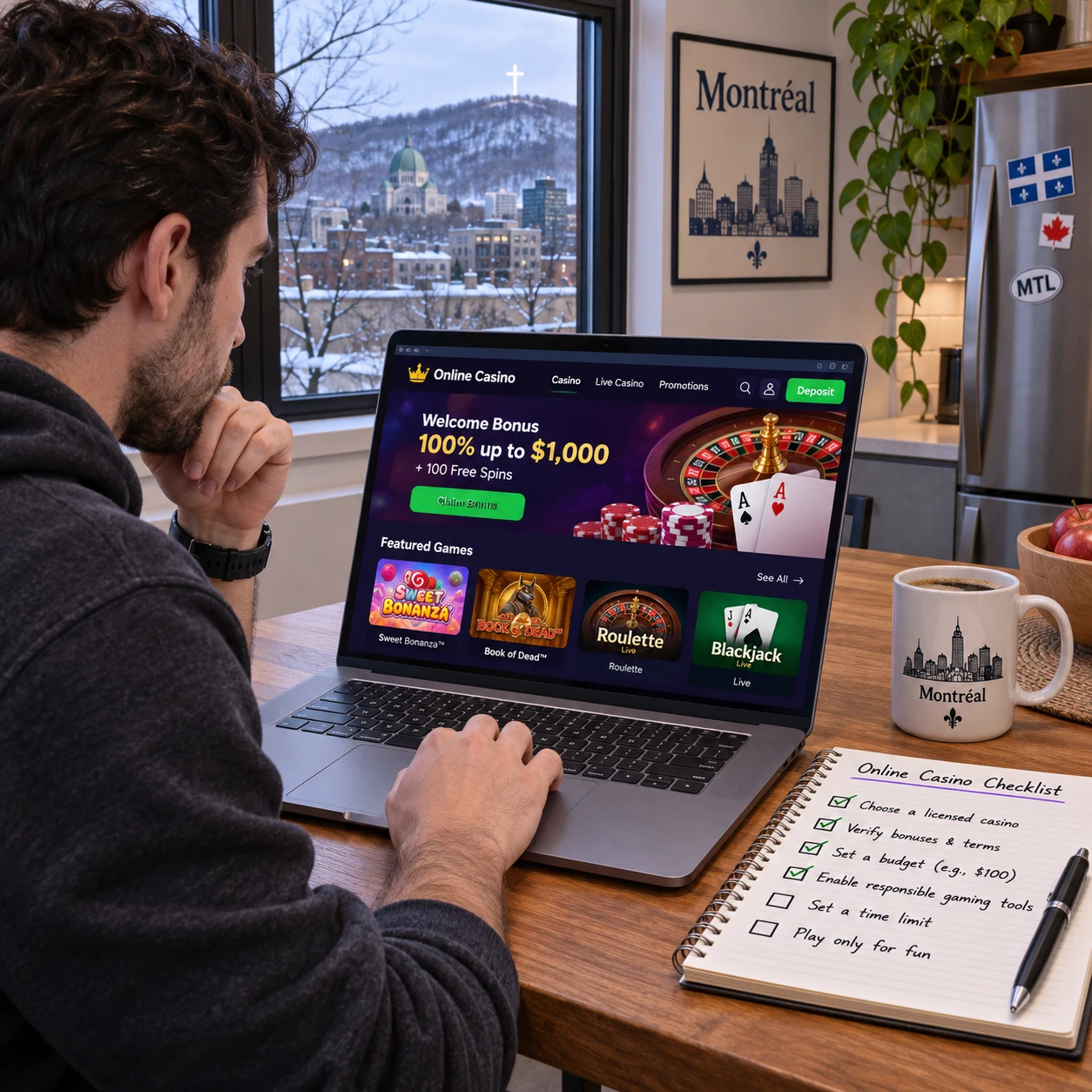
Live in Quebec and you know the drill. Open a browser, scroll a feed, catch a hockey game — the casino ads find you either way. Affiliate 'top 10' lists, welcome offers, enormous bonus numbers plastered across everything. What almost none of them mention is that Quebec's legal setup doesn't look like the rest of Canada. And that gap shapes your safety, your payments, and what you can actually do when something goes sideways.
So I wrote this to cut through it. Below: how the rules work, which safety and payment features are worth checking before you sign up, how to read a bonus past the headline number, and where French-language curated listings fit in — as one input, not the only one. Informational only, mind you. Rules and platform terms move, so confirm current details with Loto-Québec and provincial responsible-gambling resources before you deposit anything.
How Quebec's Online Gambling Rules Differ From the Rest of Canada
Canada's Criminal Code sets the broad framework, then hands most of the management to the provinces. Each one decides who may operate games, under what conditions, with what oversight. Which is why the picture shifts so much as you cross a border.
Ontario is the best-known example of an open model: a regulated iGaming market where multiple private operators hold licences and compete. Quebec went the other way and kept a monopoly. The takeaway is simple. 'Legal in Canada' doesn't automatically mean 'legal in Quebec,' and a site that's perfectly authorized for an Ontario player may not be authorized for you.
The Loto-Québec Monopoly, Explained
In Quebec, Loto-Québec is the province's sole authorized operator for online casino play, through its own platform. Lotteries, casinos and the provincially run online gaming site all sit under that same Crown corporation. In practice? The only fully provincially authorized option is Loto-Québec's own website.
Which changes how you should read search results. Private brands show up in bulk when you search for online casinos, and landing on page one is neither an endorsement nor proof of provincial authorization. Policy moves too — the debate over opening the market has come up more than once. Check Loto-Québec's current terms rather than trusting what an article, this one included, said last year.
Where Out-of-Province and Offshore Sites Sit
Then there's the grey zone. Plenty of sites licensed elsewhere accept Quebec players without any provincial authorization. Some carry licences from the Kahnawake Gaming Commission, others from European jurisdictions such as Malta. Those licences can mean something on technical standards. They are not Quebec licences.
Recourse is where the real risk sits. If a withdrawal stalls or an account gets shut, no Quebec regulator is standing behind you. What's left is the operator's own complaint process, or at best the licensing body's dispute channel — and that varies wildly in speed and in willingness to act. Of everything covered here, that lack of local oversight is the bit worth remembering longest.
Safety Checks Every Quebec Player Should Run Before Signing Up
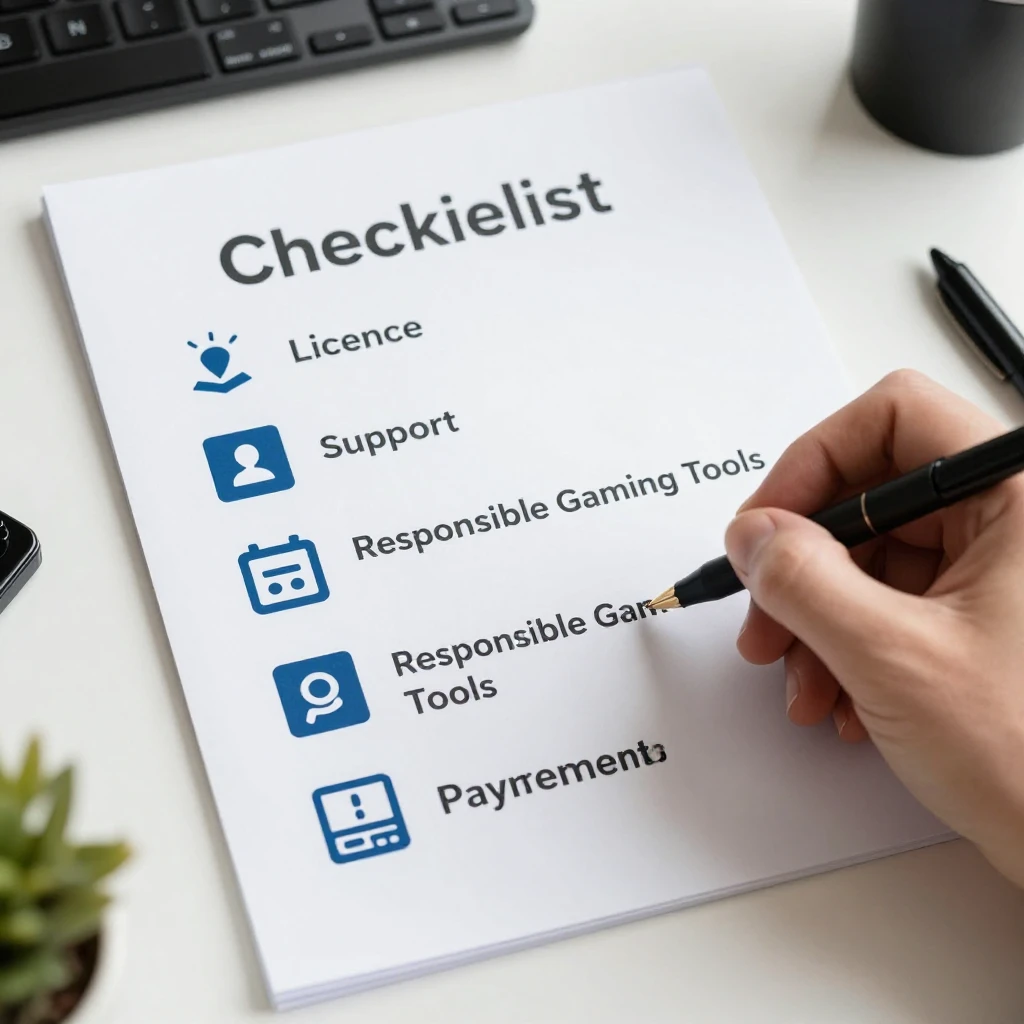
Rules only help once they turn into habits. Before I create an account anywhere, I work through a short checklist: who operates the site, what licence it holds and where the operator is registered, whether the terms exist in French, and whether the site publishes audited fairness data. Later in this guide I'll show how a curated French-language listing works as a shortcut for cross-checking those basics.
Licensing, Ownership and Contactability
A licence badge in the footer is just an image. Reading a licence claim properly means finding the licence number, the name of the licensing authority, and the legal entity named in the terms and conditions — then verifying that number on the regulator's own site. No named entity behind the brand? Number doesn't check out? Walk away.
Next, find the operating company. Reputable brands tell you who owns them, where they're registered, and how to reach them. A physical address and support that actually answers beat a shiny seal every time. Test support before depositing: send a question in French or English through live chat or email, and time how long a real answer takes. Slow when they want your money means slower when you want it back.
Responsible-Gaming Tools Worth Verifying
Any platform you're considering should make these easy to find and easy to use:
- Deposit limits (daily, weekly, monthly) that you set yourself.
- Loss limits to cap how much you can lose over a period.
- Session timers and reality checks that remind you how long you've been playing.
- Self-exclusion and cooling-off periods, from a short break to a long-term lockout.
- Immediate effect: limits should apply right away, and loosening them should involve a delay.
A trustworthy operator doesn't bury these settings. Can't find them within a couple of minutes? Treat that as a red flag. And if gambling is starting to feel like a problem, Quebec's provincial helpline and support services, including Jeu : aide et référence, offer free, confidential help in French and English.
Banking and Payments: Interac, CAD Accounts and Payout Realities
Money mechanics decide whether the whole experience feels smooth or maddening. Three questions cover most of it. Is Interac e-Transfer available? Is your balance held in Canadian dollars? And can you withdraw using the same method you deposited with?
Interac is the payment method most Canadians trust, because it runs through your own bank and doesn't require handing card details to a third party. A platform that supports Interac for both deposits and withdrawals usually knows what it's doing with Canadian players. If it takes Interac deposits but pushes withdrawals through a slower or costlier route, you want to know that before you sign up — not after you win.
Fees, Currency Conversion and Withdrawal Speed
USD-denominated accounts quietly erode your money. Every deposit and withdrawal passes through a conversion, and the spread between the quoted rate and the real rate is a hidden fee. Add a possible foreign-transaction charge from your bank, plus a card deposit treated as a cash advance with its own fee and immediate interest, and the cost adds up fast. CAD banking removes most of that friction.
On withdrawals, expect real-world timelines to differ from the marketing. E-wallets and Interac are often quickest, cards and bank transfers take longer, and weekends and pending periods add delays. Treat any quoted processing time as a best-case scenario.
KYC too. Before your first payout, nearly every legitimate operator will ask for ID, proof of address, and sometimes proof of payment method. That's normal, and a good sign — it's part of anti-fraud and anti-money-laundering controls. But it takes time, so don't wait until you've won to start the process.
Comparing Bonuses and Game Libraries Without Falling for Inflated Offers
The headline number is the least useful part of a bonus. To compare offers side by side, I look at five things:
- Wagering requirement: how many times you must play through the bonus (and whether it applies to bonus only or deposit plus bonus).
- Maximum bet while wagering: exceed it and the bonus can be voided.
- Game contribution percentages: slots may count 100%, while table games count far less.
- Expiry window: how many days you have to complete the requirements.
- Maximum cashout cap: the ceiling on what you can withdraw from bonus winnings.
Reading the Fine Print on Welcome Bonuses
A 300% match with 60x wagering and a short expiry can be worth less than a modest 100% match with 25x wagering and a generous window. Do the maths. A $100 bonus at 40x means $4,000 in wagering before you can cash out, and the house edge grinds against you the entire way.
Be extra careful with 'no-deposit' free spins. Appealing, sure, but they often come with low win caps — sometimes $50 or less — and heavy playthrough. Watch for sticky bonuses as well, where the bonus amount itself can never be withdrawn and only the leftover winnings count. Read those clauses before you accept anything.
What a Genuine Game Library Looks Like
A big number on the homepage ('6,000+ games!') says almost nothing. A good library has provider diversity, with recognizable, independently tested studios rather than a catalogue padded out with near-identical slots. Look for verifiable RTP (return to player) figures, published payout percentages, and audit reports from testing labs such as eCOGRA or iTech Labs.
For Quebec players, language matters too. Check that titles, menus and rules actually load properly in French — not just the landing page. A handful of well-audited games from established studios beats thousands of unknowns every time.
Where Curated French-Language Listings Fit Into a Smarter Selection Process
Doing all this research by hand across ten platforms can eat hours. That's where curated directories help. Used properly, they're a starting research layer, not a verdict. A good one pulls licensing information, payment-method support, francophone customer service and responsible-gaming tools into one place, so you can compare candidates quickly.
A French-language reference such as casinos en ligne québec can show you how Quebec-facing platforms stack up on the basics before you spend time digging into each one. I treat that kind of page as a research aid. It complements my own due diligence; it doesn't replace it.
The smartest workflow is simple. Use a listing to build a shortlist of three or four platforms, then verify each candidate against the criteria above: licensing and ownership, responsible-gaming tools, Interac and CAD support, bonus terms. Anything that fails a check gets dropped, no matter how good the listing made it look.
What Good Listings Check, and What They Cannot Guarantee
The limits here are real. A listing can verify licensing claims, payment support and language options. It cannot guarantee future payouts, resolve a dispute on your behalf, or stand in for the provincial rules we covered earlier. Many listings also earn affiliate commissions — worth keeping in mind while reading any ranking.
Always check when a list was last updated. Bonus terms, payment methods and even licences change fast, and a page that was accurate last spring may be stale today. No visible update date? Treat the information with extra caution.
Common Pitfalls and Frequently Asked Questions
Most problems players run into are avoidable. Here's a quick reference that points back to the checks above.
Mistakes That Cost Players Money
- Chasing bonuses without reading the terms. Wagering, max bet and cashout caps decide the real value (see the bonus section).
- Skipping KYC until withdrawal time. Submit your documents early so your first payout isn't delayed by days.
- Playing on unverified mirror links. Copycat domains can steal credentials. Type the address yourself or use a trusted source, and confirm the URL.
- Using a VPN to access geo-blocked sites. It often breaches the operator's terms, which can give them grounds to confiscate winnings and close your account, with no recourse.
Quick Answers for Quebec Players
Is online casino play legal in Quebec? Loto-Québec is the province's sole authorized operator for online casino games. Other sites operate outside the provincial framework — that's the grey zone from earlier. Check Loto-Québec's current guidance for the latest position.
Why do offshore sites still appear in search results? Search engines index whatever's online, and affiliate marketing pays. Visibility tells you nothing about provincial authorization or quality.
Does Interac work for withdrawals? On many platforms, yes. Not all, though. Confirm it in the banking or cashier terms before depositing, and check any limits or fees.
How much time should I spend verifying a platform before depositing? A solid check — licence, operator, support test, responsible-gaming tools, banking, bonus terms — runs about 20 to 30 minutes. Small price next to losing access to your balance.
Conclusion
It comes down to a three-step habit. First, know the framework: Quebec's Loto-Québec model isn't Ontario's, and 'legal in Canada' isn't the same as 'authorized in Quebec.' Second, verify the safety and payment fundamentals — licence, operator, support, responsible-gaming tools, Interac and CAD banking. Third, compare bonuses on their terms, not their headline numbers.
In 2026, curated French-language listings are most useful as the start of that process, a way to build a shortlist, not an excuse to skip the checks. Gamble only with money you can afford to lose, set your limits before you play, and reach out to provincial support services if gambling stops being fun. Rules and platform terms change, so confirm the details yourself before making any deposit.